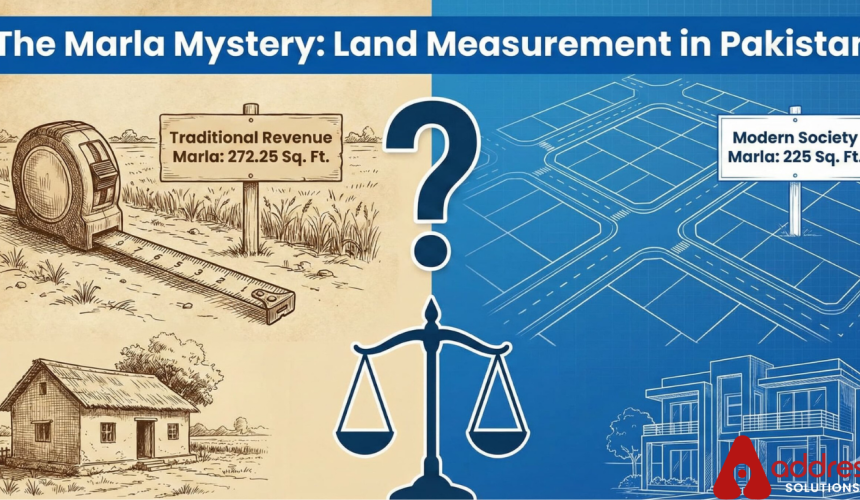
In Pakistan’s real estate market, few terms are as commonly used—and as frequently misunderstood—as the marla. Buyers, sellers, and even seasoned investors often assume that a marla represents a fixed unit of measurement. In reality, marla sizes can vary depending on region, housing authority, and development standards. Understanding these variations is essential for making informed property decisions and avoiding costly misunderstandings.
What Is a Marla?
- Traditionally, a marla is a unit of land measurement used across South Asia. In Pakistan, it is most commonly associated with residential plots and is typically expressed in square feet. However, unlike standardized international units, the size of a marla is not universally fixed across the country.
Common Marla Standards in Pakistan
- Over time, different marla standards have emerged due to regional planning policies and development authority regulations. The most commonly used marla sizes in the real estate sector include:
- 1. 272.25 Square Feet (Traditional Marla)
- This is the original marla measurement derived from the British-era system, where:
1 marla = 272.25 square feet
20 marlas = 1 kanal (5,445 square feet)
- This standard is still widely used in many traditional and rural areas of Pakistan.
- 2. 250 Square Feet (Modern or Commercial Marla)
- In many urban housing societies—particularly in cities like Islamabad and Rawalpindi—a marla is often standardized at:
1 marla = 250 square feet
20 marlas = 5,000 square feet
- This simplified system is commonly adopted by modern developers for easier planning and calculation within the property market.
- 3. 225 Square Feet (Reduced Marla Standard)
- Some housing schemes, especially those aiming to offer affordable plot options, define a marla as:
1 marla = 225 square feet
- While this allows developers to market smaller plots at lower prices, it is crucial for buyers to verify the actual square footage before purchasing.
Why Do Marla Sizes Differ?
- The variation in marla sizes is influenced by several factors:
- Development Authority Regulations: Different authorities set their own planning standards.
- Urban Planning Efficiency: Smaller marla sizes allow for higher density and better land utilization.
- Affordability Strategies: Reduced marla measurements enable developers to offer lower-priced plots.
- Historical Practices: Older areas often follow traditional marla measurements.
- Understanding which standard applies to a specific housing society is critical when comparing prices or evaluating value.
How Marla Size Impacts Buyers and Investors
- Pricing Confusion
- A 10-marla plot does not always represent the same land area. Without confirming square footage, buyers may unknowingly pay more per square foot than expected.
- Construction Planning
- Architectural designs, covered areas, and construction approvals depend on exact plot dimensions. Misunderstanding marla size can lead to planning issues or budget overruns.
- Investment Comparisons
- When comparing properties across different societies, price-per-marla comparisons can be misleading. Price per square foot offers a more accurate assessment of true value.
How to Avoid Confusion When Buying Property
- To make informed property decisions:
Always ask for the exact plot size in square feet
Review the approved layout plan of the society
Confirm measurement standards with the developer or agent
Compare properties using price per square foot, not just marla count
- These steps help protect buyers from misunderstandings and ensure transparency.
Conclusion: Clarity Is Key in Real Estate Decisions
- The concept of marla may seem simple, but its varying definitions make it one of Pakistan’s most misunderstood real estate measurements. Whether you are purchasing your first home or making a long-term investment, understanding marla sizes—and how they differ across regions—empowers you to evaluate property accurately and confidently.
- In a market where knowledge is a key advantage, clarity on land measurements can be the difference between a smart investment and an expensive mistake.